Everyone told me I couldn't make focaccia and should hire a professional baker. I made a batch anyway.
It sucked. My Italian in-laws tasted it and politely explained that I'd made bread rather than focaccia. Which was inconvenient, given what I was trying to make.
So I kept making it. Dozens of batches in the first week. Eventually, we nailed it.
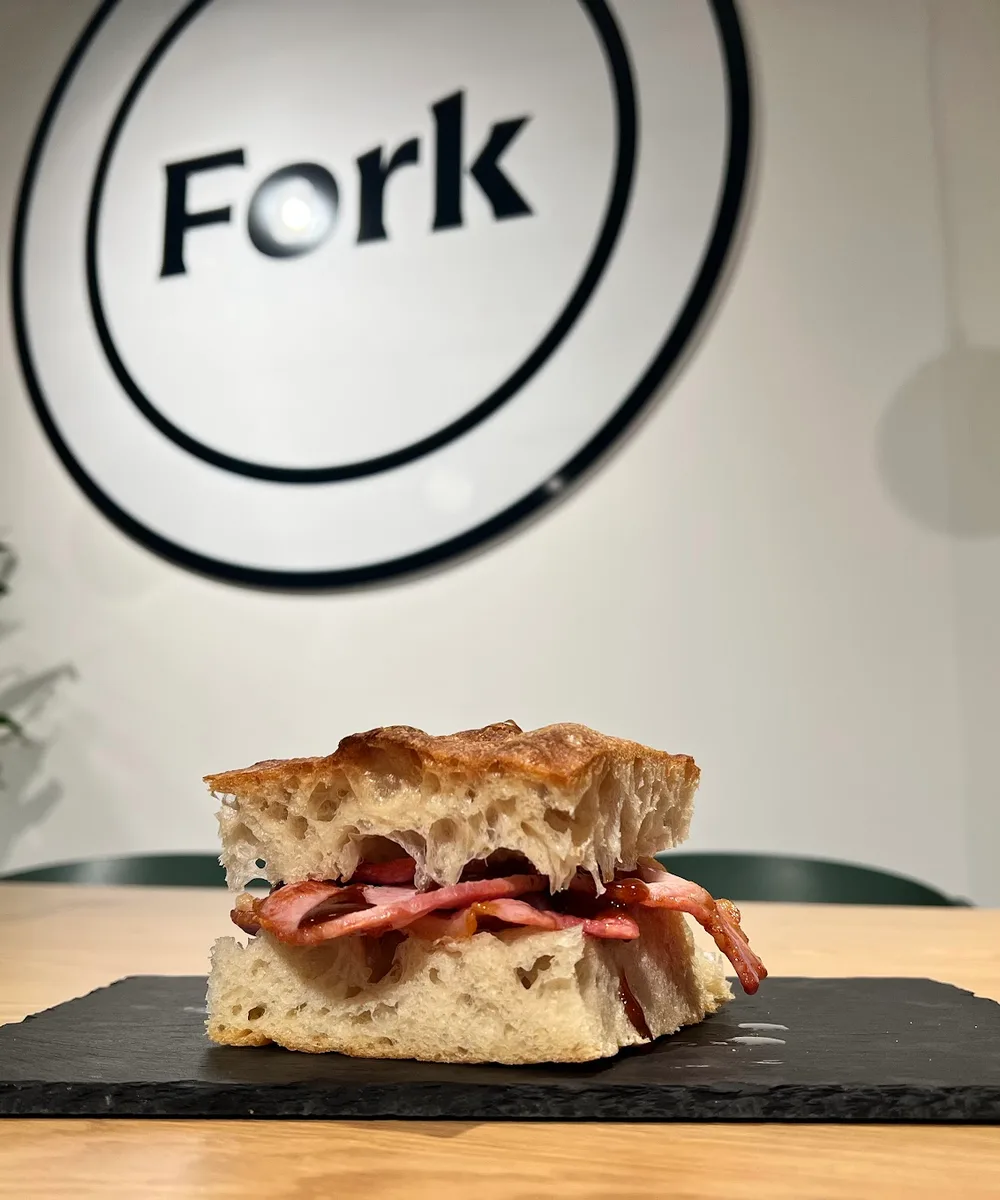
Making our own focaccia at Fork gives us a say in the whole sandwich. The bread gets the same attention as whatever goes inside it.
What goes into our focaccia
At Fork, on Newcastle's Quayside, we use equal parts extra-strong flour and type 0 flour. The dough is an 80% hydration mix, which means 800g of water for every kilo of flour. It rests overnight before baking.
The result is crisp and crunchy on the outside, soft on the inside, with big bubbles and plenty of flavour. That contrast matters. You want a crust worth biting into and a middle that gives, so you can eat your sandwich without conducting a small wrestling match.
Making it ourselves means we can pay attention to the bread as part of the finished lunch: its texture, its thickness and how it works with the filling.
The bread has a job to do
It's easy to treat bread as packaging. Spend ages choosing the filling, add something green, discuss the dressing, then put the whole lot between two slices of disappointment.
Good focaccia should be enjoyable before anything goes inside it. The filling can add plenty, but the bread needs to bring its own flavour and texture to the sandwich.
There's work involved. Dough needs attention, baking needs planning, and an overnight rest means thinking ahead. Making our own earns its place when you can taste the difference it makes to lunch.
Next time you try one of our focaccia sandwiches, tear off a little corner of the bread and eat it on its own.
If you immediately want another bit, the sandwich has started well.
Psst… fancy playing with your dough? There’s a little Focaccia Lab tucked away here.